Fashion has always borrowed from somewhere. From military uniforms to workwear, from street subcultures to cinema, the clothes that define an era almost never originate on the runway. They rise from the places where people are most creatively alive, most invested in how they present themselves, and most willing to experiment. In 2026, one of the most significant of those places is cosplay.
What began as a small community of science fiction fans wearing homemade costumes to conventions has become a global creative force with its own aesthetic vocabulary, its own construction techniques, its own economy, and a growing influence on the way professional fashion designers, brands, and everyday consumers think about what clothes can do and say. The journey from convention floor to catwalk is not a straight line, but it is undeniable.
Where It Came From
The practice of dressing as a fictional character at a gathering of fans is older than most people realise. The first documented instance occurred in 1939, when Forrest J. Ackerman and Myrtle R. Douglas attended the very first World Science Fiction Convention in New York City wearing what they called “futuristicostumes.” The costumes were inspired by the pulp magazine artwork of Frank R. Paul and the 1936 H.G. Wells film Things to Come. Douglas made both costumes: Ackerman’s based on his own specifications, and her own of her own design. The following year, at the second Worldcon in Chicago, others joined in, and an official masquerade became part of the programme.
For the next four decades, convention costuming grew steadily. Star Trek fans were among the first to build the practice of character dressing into a serious convention tradition in the late 1960s and 1970s. By the time Costume-Con launched in 1983 as the first event to make costuming its entire purpose rather than a sideshow, the community was sophisticated, passionate, and developing its own standards for craft and accuracy.
The word that named all of this came from Japan. In 1984, Nobuyuki Takahashi, a journalist associated with Studio Hard, attended Worldcon in Los Angeles and was struck by what he saw. When he returned to Japan and wrote about the experience for the magazine My Anime, he coined the portmanteau “kosupure” by combining the Japanese phonetic equivalents of “costume” and “play.” The English transliteration, cosplay, became the universal term. Japanese conventions, particularly the enormous Comiket in Tokyo, then developed the practice independently to extraordinary levels of technical refinement and cultural depth, creating a parallel tradition that would eventually merge with and enrich the Western one.
By the 1990s and 2000s, cosplay was an international phenomenon. The internet allowed practitioners to share techniques, source materials, and finished work across borders. The level of craftsmanship visible at major conventions rose steadily, producing costumes of increasing accuracy, complexity, and wearability.
What Cosplay Actually Involves
For those outside the community, it helps to understand what high-level cosplay actually demands of its practitioners.
A skilled cosplayer working on a complex build might spend months on a single costume. The process involves:
- Pattern drafting and garment construction, often from scratch without commercial patterns, requiring the same skills as bespoke tailoring
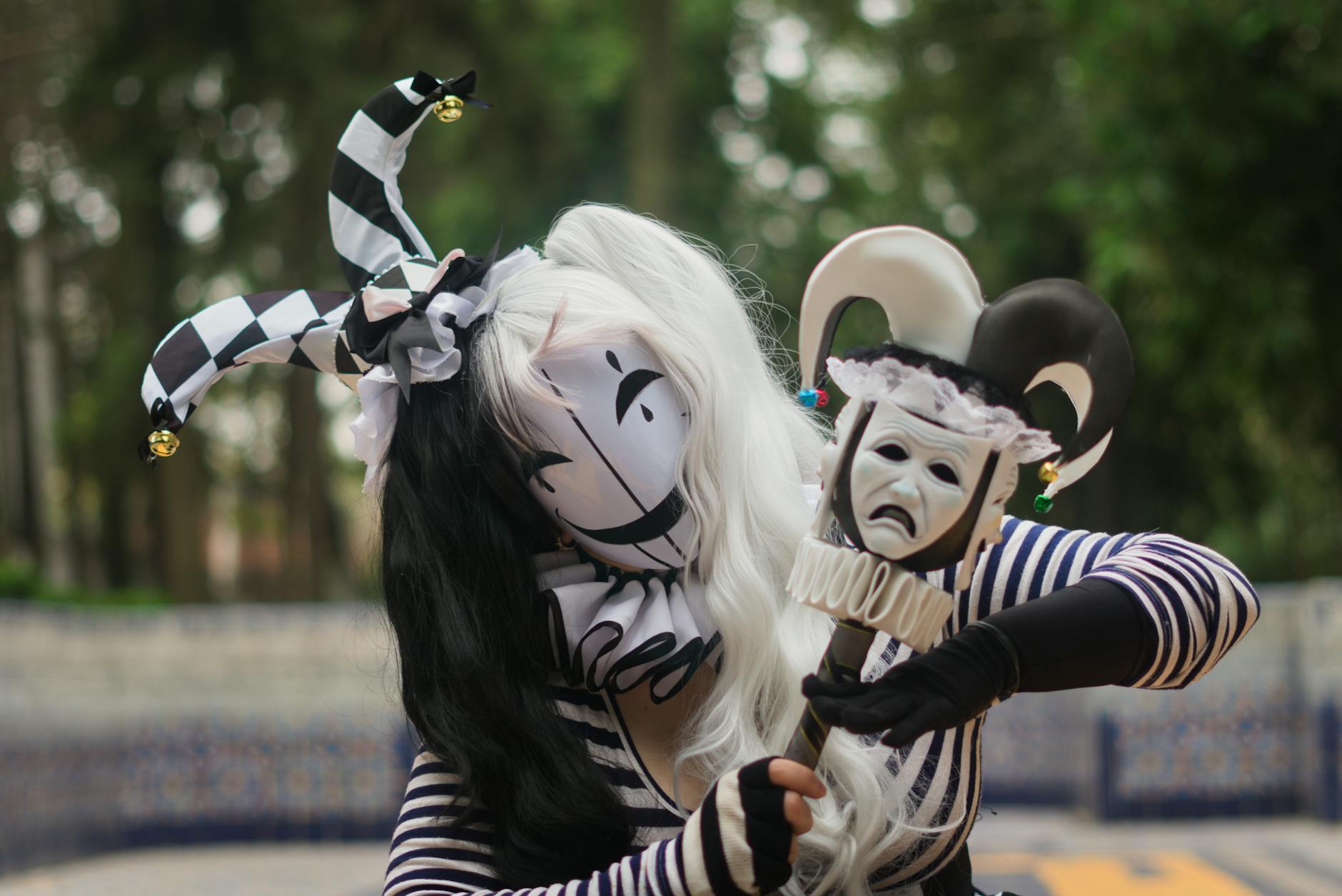
- Prop and armour fabrication using materials including thermoplastic foam, fibreglass, resin casting, 3D printing, and hand-carved components
- Surface finishing and painting to achieve textures that read as metal, leather, stone, or skin at visual distance
- Wig styling and hair shaping, frequently involving heat tools, adhesives, and custom colouring
- Makeup and prosthetics, including body paint, special effects makeup, and in some cases custom contact lenses
- Wearability engineering: designing a costume that can be transported, worn for hours in a convention environment, and photographed from multiple angles
This is not hobbyist dabbling. Many professional costume designers, prop makers, and theatrical makeup artists have cosplay backgrounds. The skills overlap significantly with film and stage production, and the cosplay community has produced practitioners who work on major film productions, theme park experiences, and fashion events.
The Point Where Cosplay and Fashion Began to Converge
The relationship between cosplay and fashion is not one of simple influence flowing in one direction. It is a genuine conversation, and it has been happening for longer than most fashion commentary acknowledges.
From the cosplay side, the influence of fashion has always been present. Many of the most celebrated cosplayers in the world approach their work with the rigour and sensibility of a trained fashion designer: obsessing over drape, proportion, historical accuracy of construction methods, and the relationship between a garment and the body wearing it. Cosplay has always been fashion, in the sense that it uses clothing to construct and communicate identity.
From the fashion side, the influence of cosplay, fan culture, and the aesthetics of games, anime, and science fiction has accelerated dramatically over the past decade. Several intersecting forces drove this convergence.
The rise of character-driven dressing. Social media created a new context for personal style in which self-presentation is performative and audience-aware in ways it never was before. Dressing for content, for a recognisable visual identity, for a character-like consistency across public appearances, is now a mainstream behaviour. Cosplay pioneered this entire logic. The cosplayer who builds and presents a fully realised visual persona is doing something that fashion influencers and brand stylists now do as standard practice.
The gaming and anime mainstream. Characters from video games, anime series, and franchise films are now among the most culturally recognisable visual icons on earth. Designers have noticed. References to specific characters, silhouettes borrowed from fictional worlds, and collaborations with gaming and anime properties have appeared across the spectrum from streetwear to luxury fashion. These are not vague aesthetic gestures; they are specific, direct engagements with the visual languages that cosplay has spent decades developing and refining.
The elevation of craft. In an era of fast fashion and algorithmic trend cycling, the kind of slow, meticulous, materials-engaged making that cosplay represents has acquired real cultural prestige. Couture has always valued handcraft. But the cosplay community democratised that value system: it made extraordinary construction accessible and visible to a mass audience, and it demonstrated that the most admired work in the community was that which showed the most evident care and skill.
On the Runway and in Retail
The influence is visible in concrete ways across the fashion industry.
Luxury fashion has drawn directly on fictional and fantastical visual references in recent collections. Designers working in the space between fashion and world-building have created runway presentations that function more like character reveals than traditional shows. The audience arrives expecting to see clothes; they leave having experienced a complete visual universe.
Streetwear and contemporary brands have pursued formal collaborations with gaming studios, anime producers, and film franchises to create capsule collections built around specific characters and properties. These are not licensed merchandise in the old sense of the term. They are designed collections by fashion teams who approach character aesthetics with the same attention a cosplayer would, asking how the visual logic of this character translates into wearable garments.
The cosMODA runway, which stages dedicated cosplay and character-inspired fashion presentations at major fashion week events, has given formally recognised platforms to designers who work directly in this space. The category is no longer underground or marginal.
In retail, the effect is evident across a wide range of price points. The consumer appetite for apparel that signals affiliation with specific fictional universes, games, and characters has created a significant and growing market. This is distinct from graphic tees and logo merchandise, though it includes those. It extends into tailored pieces, footwear, accessories, and outerwear designed with the specific visual vocabulary of fictional worlds in mind.
Cosplay as a Fashion Practice
For an increasing number of practitioners, cosplay is not a hobby they perform at conventions. It is their primary relationship with fashion.
These are people who dress in cosplay-influenced or character-derived looks in daily life: at events, in social spaces, and in the self-presentation they maintain across their online and offline identities. The aesthetic principles are the same as those of the convention floor, but the context is everyday life.
This practice connects to a longer tradition of subcultural dressing in which clothing is used to claim membership in a community and communicate a set of values. What cosplay adds to that tradition is the specific logic of character embodiment: the idea that the clothes you wear constitute a complete, intentional persona that has internal coherence and narrative meaning.
Fashion has always involved performing an identity. Cosplay makes that performance explicit, intentional, and joyful in a way that the fashion industry is still learning to fully appreciate.
The Skills Exchange
One of the most practically significant aspects of the relationship between cosplay and fashion is the movement of skills and people between the two worlds.
Cosplayers routinely possess competencies that are directly applicable to professional fashion work:
- Pattern-making and bespoke garment construction
- Specialist material knowledge across textiles, thermoplastics, metals, and composites
- Prop and accessory fabrication at exhibition quality
- Styling and presentation for visual media
- Body-aware design that accounts for movement, comfort, and wearability over extended periods
Many working costume designers, theatrical tailors, film production designers, and fashion illustrators have cosplay backgrounds or work across both communities simultaneously. The skills transfer is not aspirational; it is already happening and has been for years.
Conversely, fashion education increasingly acknowledges cosplay as a serious form of practice. Students in fashion design programmes reference cosplay work in their portfolios. Tutors cite cosplay practitioners alongside theatrical costume designers and film costume departments as reference points for construction technique and creative ambition.
What Makes Cosplay Fashion Different
The fashion industry has a long history of taking from subcultures, cleansing what it takes of its original meaning, and presenting it as something new. The question worth asking is whether the same thing is happening with cosplay, or whether this particular exchange is more reciprocal.
The evidence suggests the relationship is genuinely mutual in ways that earlier subculture appropriations were not. Several factors contribute to this.
Cosplay has its own strong critical culture. The community has well-developed values around craftsmanship, accuracy, attribution, and inclusion that it articulates loudly and publicly. When fashion takes from cosplay without acknowledgment or understanding, the community notices and says so.
The cosplay community is also economically significant in its own right. Practitioners spend real money on materials, tools, and construction. They generate significant social media audiences and influence purchasing decisions in categories far beyond costume. The fashion industry needs the cosplay community as a customer, which gives the community real leverage.
Finally, cosplay has produced practitioners who are now industry professionals in positions to shape what happens at the intersection of the two worlds. This is not outside influence knocking at the door. It is people inside the building, doing the work.
A Cultural Conversation That Is Just Getting Interesting
Cosplay culture and fashion are in genuine dialogue, and that dialogue is becoming richer, more equal, and more consequential by the year. The runway is learning from the convention floor. The convention floor has always known what good making looks like.
For anyone who loves clothes, craft, and the endlessly inventive ways human beings use appearance to construct meaning, this particular intersection is one of the most exciting places to be watching right now.
Disclaimer: This article is intended for general informational and cultural commentary purposes only. References to individuals, events, and organisations are drawn from publicly available sources and presented in good faith.