
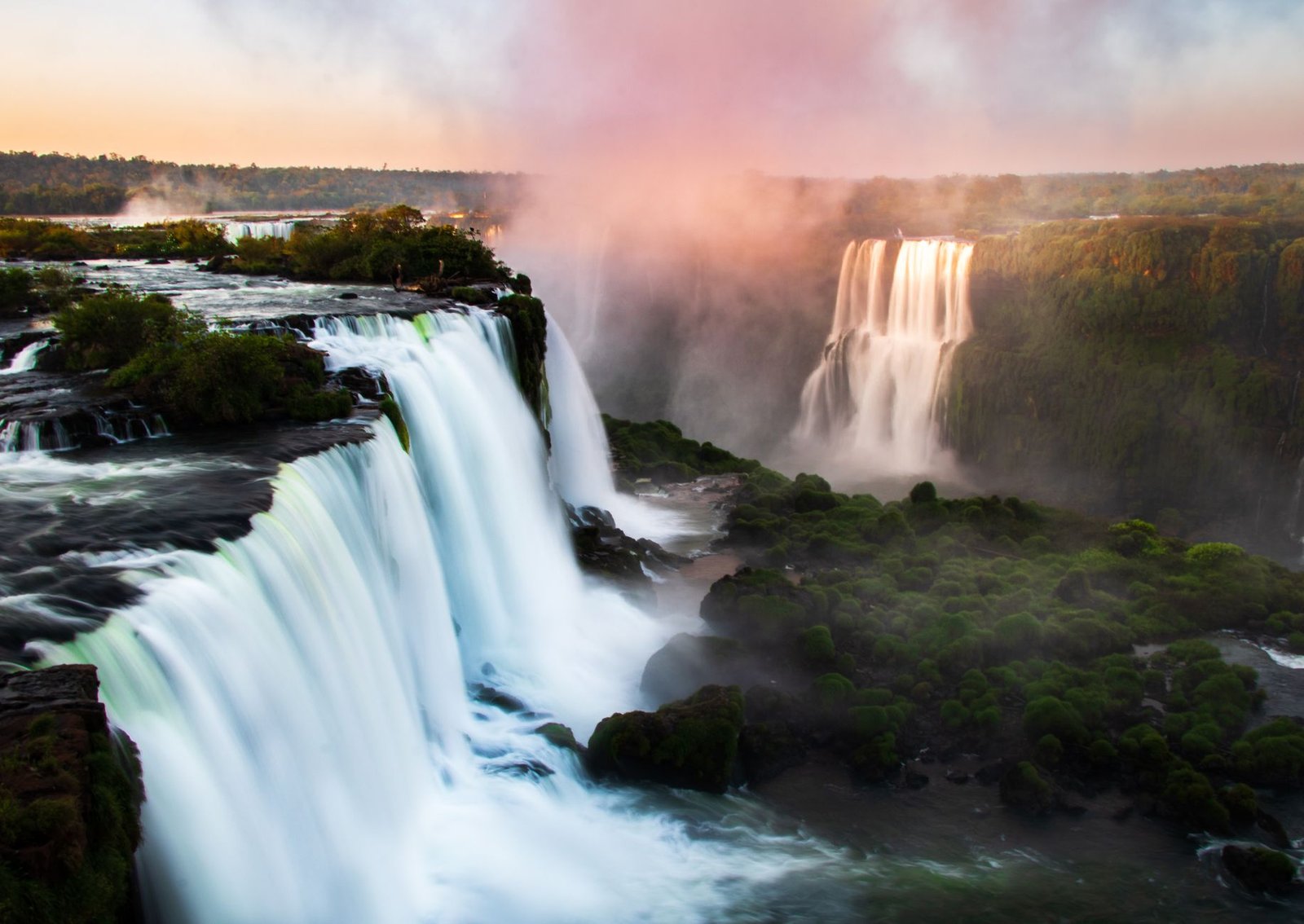
Waterfalls occupy a unique place in the human imagination. They combine raw physical power with visual drama in a way that few natural phenomena can match. Standing in front of a massive waterfall produces a specific feeling: awe mixed with the recognition of your own smallness in the face of forces that have been moving water across stone for thousands of years. This is why waterfalls rank among the most visited natural attractions on earth and why certain destinations have become pilgrimage sites for travelers seeking to experience water at its most magnificent.
The world’s greatest waterfall destinations offer distinct experiences. Some deliver sheer scale and volume. Others showcase height or unique geological formations. A few combine accessibility with breathtaking beauty. Visiting the greatest waterfalls requires understanding what each one offers and when to visit for the best experience.
The Big Three: Niagara, Victoria, and Iguazu
Three waterfalls dominate international consciousness and consistently appear on global travel lists: Niagara Falls, Victoria Falls, and Iguazu Falls. Each occupies a different corner of the world and delivers a completely different experience, yet all three rank among the most visited waterfalls globally.
Niagara Falls
Niagara Falls actually comprises three separate waterfalls: the American Falls, the Bridal Veil Falls, and the Horseshoe Falls. The Horseshoe Falls on the Canadian side is the largest and most powerful in terms of water flow rate, moving approximately 2,400 cubic metres of water per second over a drop of about 50 metres. What Niagara lacks in height compared to other world waterfalls, it compensates for through sheer volume and consistent power. The waterfall straddles the border between Canada and the United States, with the best unobstructed views available from the Canadian side.
Niagara Falls is the most accessible major waterfall destination in the world. Surrounding towns offer every form of accommodation and service. Boat tours carry visitors directly into the mist at the base of the falls. Tunnels cut through the rock allow viewing from behind the water itself. At night, the falls are illuminated with colored lights, creating a completely different aesthetic from daytime viewing. The tourist infrastructure is extensive and well-developed, which means Niagara is suitable for travelers of all ages and physical abilities.
The best time to visit is late May through early September, when water levels are highest and weather is most stable. Winter visits are possible but require tolerance for extreme cold and icing.
Victoria Falls
Victoria Falls straddles the border between Zambia and Zimbabwe on the Zambezi River. With a height of approximately 108 metres and a width of 1.7 kilometres, Victoria Falls creates one of the largest continuous curtains of falling water on earth. The local name, Mosi-oa-Tunya, translates as “The Smoke That Thunders.” This refers to the massive mist plume that rises from the gorge. During the wet season, the spray can be visible from more than 50 kilometres away.
The experience of Victoria Falls differs significantly from Niagara. The falls are surrounded by wilderness rather than urban development. Wildlife including elephants, buffalo, and various bird species inhabit the surrounding area. Viewing is often done from vantage points cut into the canyon walls, creating a sense of standing at the edge of something genuinely wild. Helicopter flights provide aerial perspectives that ground-level viewing cannot deliver. For adventurous travelers, Devil’s Pool offers the opportunity to swim in a natural rock pool at the very edge of the falls during low-water seasons.
Getting There The nearest airports are Harry Mwanga Nkumbula International (LIV) in Livingstone, Zambia, and Victoria Falls International (VFA) in Zimbabwe. Livingstone is approximately 10 kilometres from the falls on the Zambian side. A helicopter transfer or ground transportation takes 15 to 30 minutes.
Best Time to Visit April through May and September through October offer ideal conditions. These months provide adequate water levels for full spectacle and manageable weather.
Visa Requirements The KAZA visa agreement now allows seamless border crossing between Zambia and Zimbabwe. Verify current visa requirements with official government sources for your nationality.
Essential Information
- Accommodation: Available in both Livingstone (Zambia) and Victoria Falls (Zimbabwe)
- Cost: Guided tours range from 30 to 150 USD. Adventure activities such as helicopter flights cost 100 to 300 USD
- Physical requirements: Moderate fitness for canyon walks. Swimming at Devil’s Pool requires comfort in water
- Currency: Zambian Kwacha (ZMW) in Zambia, Zimbabwean Dollar (ZWL) in Zimbabwe
- Language: English (widely spoken in tourist areas)
- Coordinates: 17.9245°S, 25.8563°E
Iguazu Falls
Iguazu Falls spans the border between Argentina and Brazil and comprises over 270 individual cascades spread across nearly 2.7 kilometres. Rather than a single massive drop, Iguazu presents a complex system of waterfalls flowing through subtropical rainforest. The most famous section, called Garganta del Diablo (Devil’s Throat), is 80 metres tall and 150 metres wide, creating a focal point within the larger system.
What distinguishes Iguazu from the other two major waterfalls is the immersive environment. Walkways on the Argentine side take visitors directly over sections of the falling water. The Brazilian side offers panoramic views showing the entire scale of the system. The surrounding rainforest is home to toucans, coatis, and occasionally jaguars. The water volume can swell to eight times its normal level during the rainy season, dramatically altering the falls’ appearance.
The best viewing time is April through May and September through October. During these months, water levels are adequate for full visual effect while weather remains stable enough for comfortable walking and photography. Puerto Iguazú in Argentina and Foz do Iguaçu in Brazil both offer airports and tourist infrastructure.
Getting There Cataratas International Airport (IGR) serves both sides. Puerto Iguazú is on the Argentine side, Foz do Iguaçu is on the Brazilian side. Travel between the two is approximately 30 kilometres by road. Ground transportation from airports to viewing areas takes 30 to 60 minutes.
Best Time to Visit April through May and September through October provide the best balance of adequate water flow and stable weather for comfortable viewing and photography.
Visa Requirements Visa requirements vary by nationality for both Argentina and Brazil. Check official government sources for current requirements.
Essential Information
- Accommodation: Available in both Puerto Iguazú (Argentina) and Foz do Iguaçu (Brazil)
- Cost: National park entry ranges from 15 to 25 USD. Guided tours and boat trips range from 30 to 80 USD
- Physical requirements: Moderate fitness. Extensive walking on trails and boardwalks required
- Currency: Argentine Peso (ARS) in Argentina, Brazilian Real (BRL) in Brazil
- Language: Spanish in Argentina, Portuguese in Brazil. English widely spoken in tourist areas
- Coordinates: 25.5951°S, 54.5745°W
The Tallest and Most Remote
Angel Falls
Angel Falls in Venezuela holds the distinction of being the world’s highest uninterrupted waterfall at 3,212 feet. Water drops from a tabletop mountain called a tepui, often breaking into mist before reaching the ground. The remote location in Canaima National Park means that reaching the falls requires a small plane flight followed by river travel, making it one of the least accessible major waterfalls globally.
Political instability in Venezuela has made visiting Angel Falls considerably more challenging in recent years. Few tourists currently reach the falls, which means the experience retains a quality of discovery that more accessible destinations cannot offer. For those able to arrange visits, the remoteness is part of the appeal. This waterfall still feels untouched by the tourism industry.
Getting There La Carlota Airport (CCS) in Caracas is the main international hub. Small aircraft flights to Canaima National Park are the only practical option for reaching Angel Falls. These flights typically require booking through specialized tour operators.
Best Time to Visit June through September offer the highest water flow but present more challenging flying conditions. December through March offer the most stable weather.
Visa Requirements Verify current Venezuelan visa requirements with official government sources. Political conditions may affect tourist access.
Essential Information
- Cost: Tours range from 500 to 1,500 USD for multi-day expeditions
- Physical requirements: High fitness level required. The journey involves air travel, river travel, and jungle hiking
- Language: Spanish. English less commonly spoken
- Coordinates: 5.9701°N, 62.8844°W
Unique Geological Formations
Gullfoss, Iceland
Gullfoss, which translates as “Golden Falls,” flows from the glacial meltwater of the Hvítá River in southwestern Iceland. Rather than a single drop, Gullfoss descends in two distinct stages at nearly right angles to each other, first dropping about 11 metres then cascading a further 21 metres into a deep canyon. The glacial sediment in the water gives it a golden tint in sunlight, explaining the waterfall’s name.
Gullfoss is part of Iceland’s Golden Circle, a popular tourist route that can be completed in a day trip from Reykjavik. The surrounding landscape is characterised by volcanic rock formations and geothermal activity. Paved walking paths provide safe access to multiple viewing angles. The volume remains consistent year-round due to the constant supply of glacial meltwater, making Gullfoss visitable in any season.
Getting There Keflavik International Airport (KEF) near Reykjavik is Iceland’s main international hub. Gullfoss is approximately 125 kilometres from Reykjavik. A rental car or organized tour can cover the distance in 2 to 3 hours.
Best Time to Visit Year-round access. Summer (June through August) offers 24-hour daylight. Winter (December through February) offers shorter days but often stunning ice formations. Spring and autumn provide good balance of daylight and manageable weather.
Visa Requirements Check Iceland’s official government website for current visa requirements by nationality.
Essential Information
- Accommodation: Available in Reykjavik and small towns throughout the region
- Cost: Free to view. Visitor center offers paid exhibits and services
- Physical requirements: Easy to moderate. Paved paths accessible to most fitness levels
- Currency: Icelandic Króna (ISK)
- Language: Icelandic. English widely spoken
- Coordinates: 64.3269°N, 19.0208°W
Plitvice Lakes, Croatia
Plitvice Lakes National Park represents a waterfall system unlike the others on this list. Rather than a single dramatic drop, Plitvice consists of 16 interconnected lakes created by travertine dams formed through the growth of algae, bacteria, and moss. The result is a cascading series of smaller waterfalls connecting upper and lower lake systems. The water’s color shifts from sky blue to emerald green to grey depending on light and mineral content.
The park is a UNESCO World Heritage Site and represents one of Europe’s most visited natural attractions. Walking trails wind through forests and along lakeshores. Boat rides traverse the larger lakes. Wooden boardwalks keep visitors on designated paths while allowing intimate access to the falls and lake systems. The setting feels more like a series of discoveries than a single monumental sight.
Getting There Split Airport (SPU) and Zagreb Airport (ZAG) are the closest international hubs. Plitvice is approximately 140 kilometres from Zagreb and 230 kilometres from Split. Ground transportation takes 2.5 to 3.5 hours depending on starting point.
Best Time to Visit May through September offers warm weather and full accessibility. October through April brings fewer visitors but some trails may be closed. Winter (December through February) creates stunning ice formations.
Visa Requirements Check Croatia’s official government website for current visa requirements by nationality.
Essential Information
- Accommodation: Available in towns near the park. Lodging within the park is limited
- Cost: National park entry ranges from 15 to 25 EUR depending on season
- Physical requirements: Easy to moderate. Extensive walking on trails and boardwalks
- Currency: Croatian Kuna (HRK)
- Language: Croatian. English widely spoken in tourist areas
- Coordinates: 44.8654°N, 15.5822°E
Seasonal Waterfalls and Hidden Gems
Jim Jim Falls, Australia
Jim Jim Falls in Kakadu National Park reaches 850 feet but is completely dependent on seasonal rainfall. During the dry season from April through October, the falls are often invisible or appear as a mere trickle. During the wet season from November through March, heavy rains transform the creek into a powerful cascade. The roads to the falls become impassable during the wet season, so viewing requires scenic helicopter flights, which adds both expense and spectacle to the experience.
Getting There Darwin International Airport (DRW) is the closest major hub. Kakadu National Park is approximately 210 kilometres from Darwin. Ground transportation takes 2.5 to 3 hours. Helicopter flights operate from Darwin and nearby communities.
Best Time to Visit Dry season (April through October) offers road access. Wet season (November through March) requires helicopter flights. Helicopter tours offer the advantage of aerial viewing but at significantly higher cost.
Visa Requirements Check Australia’s official government website for current visa requirements by nationality.
Essential Information
- Accommodation: Available in towns near Kakadu. Limited options near Jim Jim
- Cost: Park entry approximately 25 AUD. Helicopter flights 150 to 300 AUD
- Physical requirements: Varies by access method. Helicopter requires minimal fitness. Road access requires 4WD vehicle
- Currency: Australian Dollar (AUD)
- Language: English
- Coordinates: 12.7139°S, 132.5347°E
Kaieteur Falls, Guyana
Kaieteur Falls on the Potaro River in Guyana’s Kaieteur National Park is one of the world’s most powerful waterfalls by flow rate, averaging approximately 23,400 cubic feet per second. The waterfall sits in one of the most biodiverse regions on earth, surrounded by pristine rainforest. The remote location means few tourists visit compared to the major waterfall destinations, creating an experience of genuine discovery for those who do make the journey.
Getting There Cheddi Jagan International Airport (GEO) in Georgetown is Guyana’s main international hub. Flights to Kaieteur require small aircraft. Tour operators in Georgetown arrange both flights and ground logistics.
Best Time to Visit Year-round access via air. Dry seasons (September through November and February through April) offer best flight schedules and ground conditions.
Visa Requirements Check Guyana’s official government website for current visa requirements by nationality.
Essential Information
- Cost: Tours typically 300 to 600 USD per person for multi-day expeditions
- Physical requirements: Moderate fitness. The experience involves air travel and jungle hiking
- Language: English (official language)
- Currency: Guyanese Dollar (GYD)
- Coordinates: 5.1919°N, 59.4606°W
Choosing Which Waterfall to Visit
Selecting a waterfall destination depends on several factors. Consider your physical ability and tolerance for crowds. Niagara offers accessibility but attracts millions of visitors annually. Victoria and Iguazu provide dramatic natural settings with moderate infrastructure. Angel Falls and Kaieteur require serious expedition planning and significant cost.
Consider seasonal timing. Northern Hemisphere destinations are best visited June through September. Southern Hemisphere destinations are ideal December through March. Some waterfalls show dramatically different appearances depending on season, making timing crucial for certain experiences.
Consider what you want from the experience. For raw power and volume, Niagara cannot be surpassed. For scale and wilderness setting, Victoria wins. For complex beauty and rainforest immersion, Iguazu delivers. For height and remoteness, Angel Falls offers unmatched dramatic impact.
The world’s greatest waterfalls remain fundamentally unchanged. Water flows downward under gravity, shapes stone, and creates mist. Yet what humans bring to the experience of standing before them transforms every waterfall visit into something genuinely personal. Wonder, humility, and the recognition of forces beyond our control combine to create profound moments that stay with travelers long after they depart.
Disclaimer: This article is intended for general informational and travel inspiration purposes only. Always verify current travel conditions, safety information, and visa requirements with official government sources before booking travel to any waterfall destination. Some destinations require permits, guided tours, or special precautions. Physical fitness requirements vary by location; assess your own capabilities before planning visits.


