Looking for a workout that torches calories while keeping you mentally engaged? Squash delivers exactly that. This indoor racquet sport combines cardiovascular training, muscular conditioning, and strategic thinking into one intense package that makes traditional gym sessions seem dull by comparison.
Why Squash Stands Out as a Fitness Choice
Squash involves two players alternating hits of a small rubber ball against the walls of an enclosed court. The action never stops. You’re constantly lunging forward, backpedaling, pivoting sideways, and stretching to reach shots. This continuous movement pattern provides a comprehensive workout that challenges your entire body.
The physical benefits extend beyond calorie burning. Your legs develop explosive power from repeated lunges, your core strengthens from constant rotation and balance adjustments, and your coordination sharpens dramatically.
The mental dimension sets squash apart from purely physical workouts. Every rally requires split-second decisions about shot selection, positioning, and tactical adjustments. This cognitive engagement keeps your mind occupied, making time pass quickly unlike the tedium some experience during repetitive cardio exercises.
Getting Your Feet on the Court
Starting squash requires less investment than you might expect. Most fitness facilities, recreation centers, and dedicated squash clubs offer court access. Many venues provide introductory sessions or beginner classes, which represent an excellent starting point if you’ve never held a squash racquet.
Equipment Essentials
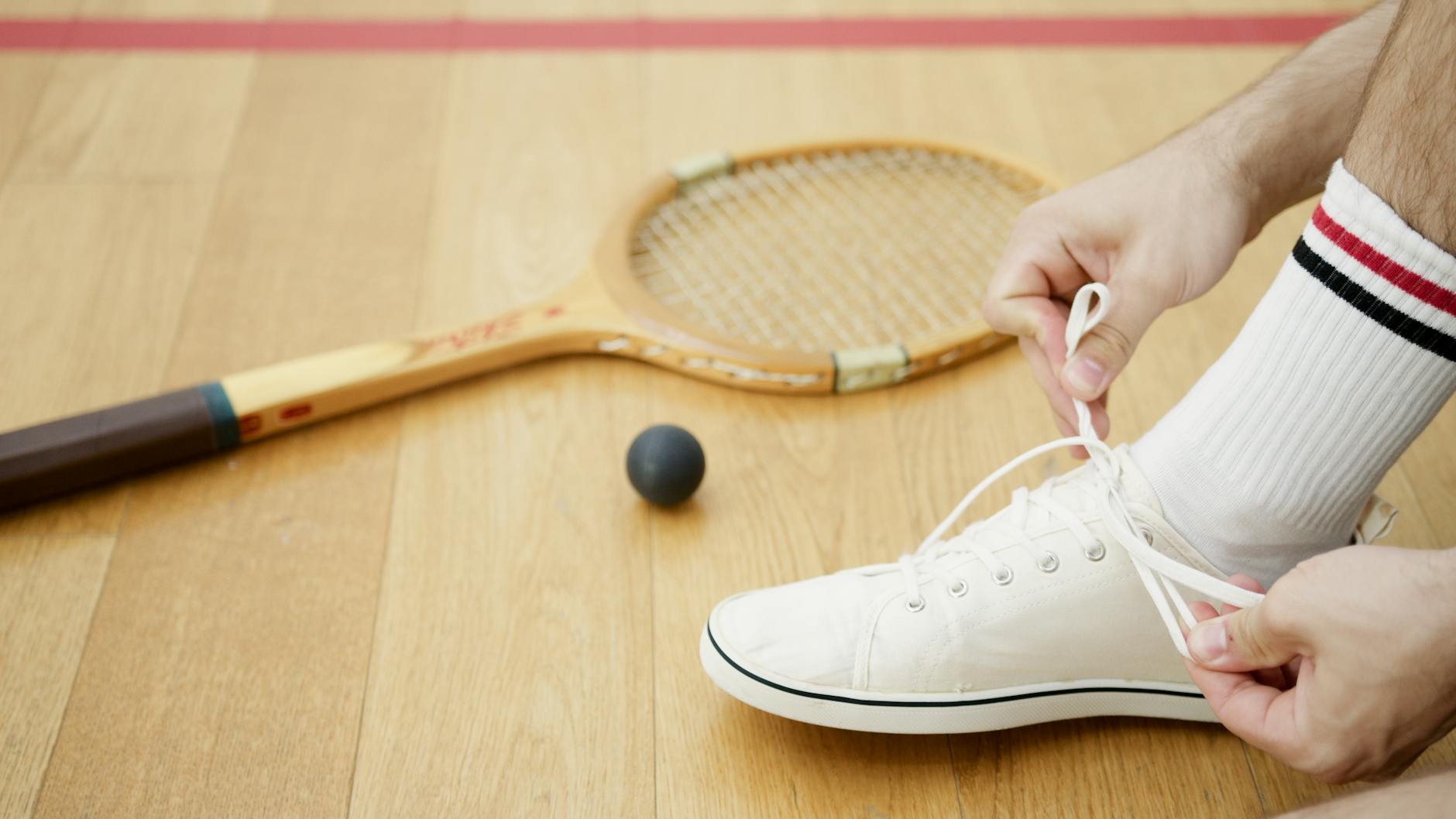
You’ll need a squash racquet, which differs from tennis racquets by being lighter and more compact. Squash balls are specifically designed for the sport and come in different varieties. Non-marking court shoes are mandatory to protect the playing surface. For beginners, renting equipment makes financial sense until you decide to commit to regular play.
Protective eyewear isn’t optional, it’s essential. The ball travels at high speeds in an enclosed space, and eye injuries can be severe without proper protection.
Basic Game Mechanics
The fundamental concept is straightforward: players alternate hitting the ball against the front wall, and it must hit the floor no more than once before being returned. The ball can ricochet off side walls or the back wall before reaching the front, which creates numerous strategic possibilities. Points are earned when your opponent cannot return the ball properly.
Don’t stress about memorizing every rule immediately. Your initial focus should be on comfortable court movement and consistent ball contact.
Practical Strategies for New Players
Warm Up Thoroughly
Squash demands explosive movements that can strain cold muscles. Dedicate ten minutes to warming up before stepping onto the court. Light cardiovascular activity, dynamic stretching, and practice swings prepare your body and significantly reduce injury risk. Pay particular attention to your ankles, knees, and shoulder joints.
Prioritize Movement Over Power
Footwork separates competent players from struggling beginners. Practice moving efficiently using small, quick steps. Maintain weight on the balls of your feet for rapid directional changes. After hitting each shot, work toward returning to a central court position, which optimizes your ability to reach your opponent’s next return.
Simplify Your Technique
Keep your swing mechanics straightforward initially. Grip the racquet with relaxed hands, using wrist action rather than arm strength to generate power. Effective shots depend more on placement accuracy than hitting velocity, particularly during the learning phase.
Select the Appropriate Ball
Squash balls feature colored dots indicating bounce characteristics, with blue dot balls providing the highest bounce for beginners, followed by red dots for progressing players. The double yellow dot ball has the lowest bounce and is used by advanced players. Starting with a blue or red dot ball prevents frustration and helps develop proper technique before advancing to less forgiving options.
Invest in Professional Instruction
Even a couple of coaching sessions can dramatically accelerate your progress. An experienced instructor helps establish proper form from day one, preventing counterproductive habits that become difficult to correct. They’ll also introduce you to court positioning principles and basic tactical approaches that enhance enjoyment.
Respect Your Current Fitness Level
Avoid attempting to chase every ball during your initial sessions. Build intensity progressively as your fitness improves and movements become more natural. Letting some balls pass you by while learning is completely acceptable. Monitor your body’s signals and rest when necessary.
Health and Safety Awareness
While squash is generally safe, the confined space and rapid ball speed require awareness. Always wear squash-specific protective eyewear, eye injuries can be serious. Stay conscious of your opponent’s position to prevent collisions, and ensure they have unobstructed access to the ball. If you have pre-existing joint concerns, particularly involving knees or ankles, consult healthcare professionals before starting, as the lateral movements can be demanding on these areas.
Developing Your Squash Practice
As your abilities develop, target playing squash two or three times weekly. This frequency supports skill improvement while providing sufficient recovery time. On days without squash, incorporate complementary activities, yoga enhances flexibility, moderate strength training benefits legs and core, and additional cardiovascular work builds endurance.
Squash’s appeal grows with experience. As you improve, you’ll discover additional shot varieties, develop tactical understanding, and find yourself sustaining longer rallies. The competitive element maintains motivation whether you’re playing casual matches or joining organized leagues.
Tracking Progress and Maintaining Enthusiasm
Monitor your development by observing rally duration, your feelings during and after matches, and improvements in court coverage. Acknowledge small achievements, such as successfully executing a new technique or completing an entire game without extreme exhaustion.
Finding a regular playing partner at a comparable skill level proves valuable. Consistent partnerships simplify scheduling and create mutual accountability. As both players improve, you’ll naturally push each other toward better performance.
Many squash facilities organize social gatherings, ladder tournaments, or beginner-friendly leagues. These opportunities help you meet fellow players, learn through observation of more skilled participants, and sustain your enthusiasm.
Squash provides an efficient, engaging workout that produces tangible results physically and mentally. The learning progression is reasonable for newcomers, and the social component adds another valuable dimension to your fitness regimen. Consider trying it, you might discover your preferred method for staying fit.
Disclaimer: This article offers general information about squash as a fitness activity and does not replace professional medical guidance, personal training services, or instruction from qualified coaches. Consult healthcare and fitness professionals before beginning any new exercise program.