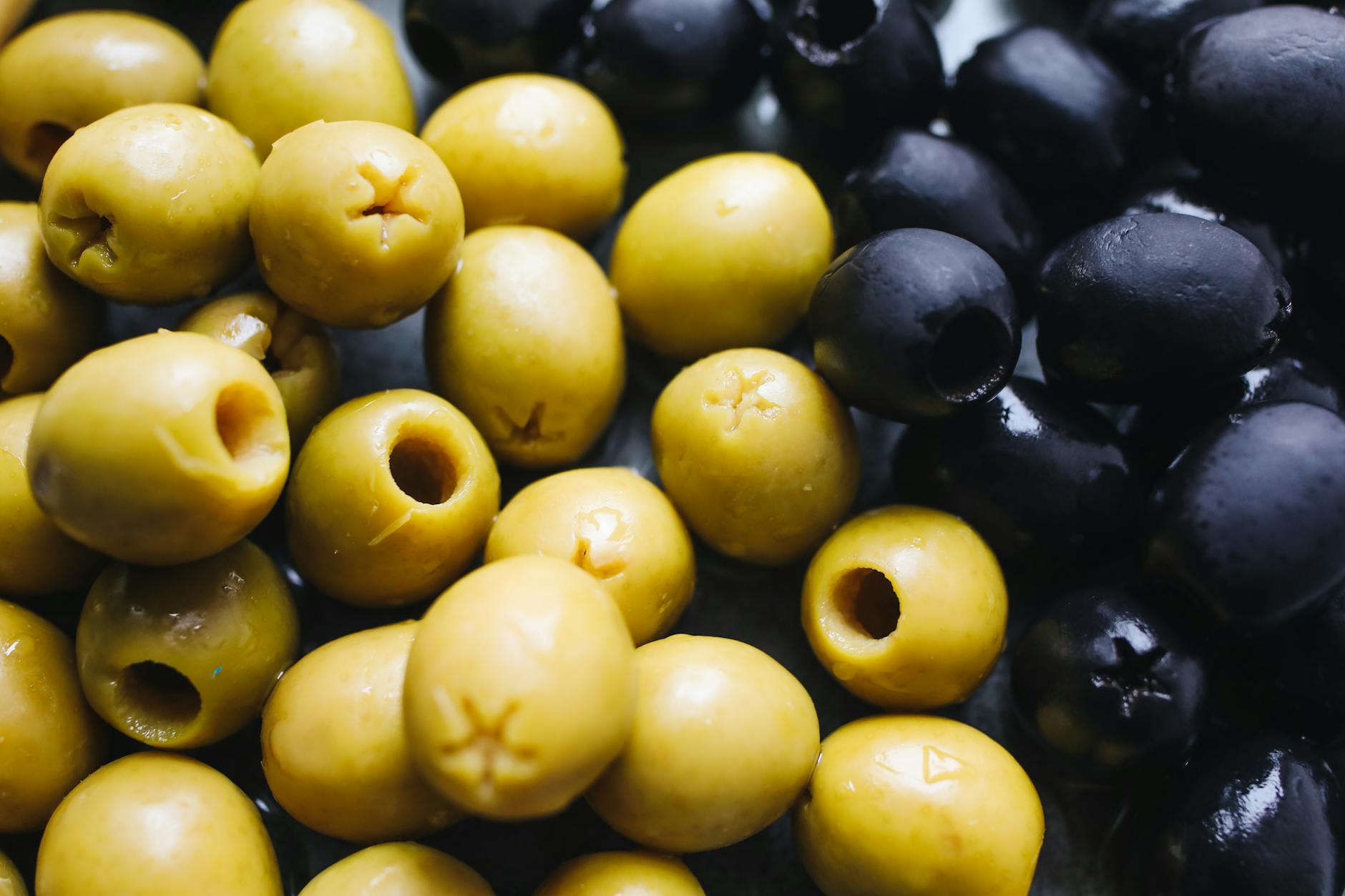
When you look at olives at the grocery store, you might wonder what makes green olives different from black ones. Are they from different trees? Do they taste the same? Which one should you choose for your salad or pizza?
The answer is simpler than you think. Green and black olives come from the same tree. The main difference is when they are picked and how they are processed.
What Are Green Olives?
Green olives are harvested before they become fully ripe. Farmers typically pick them from late September to late October when the fruit is still firm and green.
You cannot eat olives straight from the tree. They taste extremely bitter due to a natural compound called oleuropein. To make them edible, green olives go through a curing process that involves soaking in a lye solution followed by brining in saltwater. This process removes the bitterness and takes anywhere from a few days to several months.
The result is a firm olive with a tangy, slightly bitter flavor. Green olives often come stuffed with ingredients like pimentos, garlic, cheese, jalapenos, or almonds.
What Are Black Olives?
Black olives are picked when they are fully ripe. As olives mature on the tree, they change color from green to yellow, then purple, and finally to a dark brown or black shade.
Naturally ripe olives range from light brown to deep purple in color and are rarely completely black unless they are sun-dried varieties from specific regions.
Black olives undergo a simpler curing process compared to green olives. They skip the fermentation step and can be cured directly in brine. This makes them softer, oilier, and milder in flavor.
The California Black Olive Exception
Most black olives you find in cans at supermarkets are not naturally ripened. These are actually green olives that have been artificially darkened using ferrous gluconate, an iron compound combined with oxygen. This process is faster and cheaper than waiting for olives to ripen naturally but results in less flavorful olives.
Key Differences Between Green and Black Olives
Ripeness and Harvest Time
The primary difference is ripeness. Green olives are unripe, while black olives are fully mature. This affects everything from texture to taste.
Texture
Green olives are firmer and possess more pronounced natural bitterness that is difficult to eliminate even after brining. Black olives are softer, juicier, and more tender.
Flavor Profile
Green olives have a sharp, tangy, and slightly bitter taste. They are saltier due to their curing process. Black olives offer a milder, richer, and more buttery flavor that easily absorbs the taste of whatever brine or oil they are stored in.
Processing Methods
Green olives undergo fermentation involving soaking in a lye solution before being cured in salt brine, while ripe olives skip the fermentation step and are cured right away.
Color Variations
Green olives can appear yellow or yellowish-green. Black olives range from light brown to deep purple to almost black, depending on the variety and ripeness level.
Nutritional Comparison
Both types of olives are nutritious, but they have some differences in their nutritional profiles.
Calories and Fat Content
Black olives contain about 299 calories per 100 grams with 29.8% fat, while green olives have approximately 167 calories per 100 grams with 16.7% fat. This makes green olives lower in calories.
Both types contain mostly monounsaturated fats, particularly oleic acid, which supports heart health.
Sodium Content
Green olives contain twice as much sodium as black olives. If you have high blood pressure or need to watch your salt intake, black olives might be the better choice.
Vitamins and Minerals
Green olives contain twice as much vitamin E as black olives and are higher in polyphenols, which are antioxidants with anti-inflammatory benefits.
Black olives are rich in iron, providing about 6.28 mg per 100 grams, which helps meet your daily iron needs. This makes them especially beneficial for vegetarians and vegans.
Both varieties contain calcium, copper, vitamin A, and B vitamins including thiamine, niacin, and pantothenic acid.
Antioxidant Content
Green olives tend to be higher in polyphenols than black olives. These antioxidants help fight inflammation, protect blood vessels, and may reduce the risk of chronic diseases including certain cancers.
Black olives contain fewer polyphenols but are higher in polyunsaturated fats.
Culinary Uses
Best Uses for Green Olives
Green olives work well in dishes with bold flavors. Their firm texture and tangy taste make them perfect for:
- Martinis and cocktails
- Antipasto platters
- Mediterranean salads
- Tapenade spreads
- Stuffed olive appetizers
- Pizza toppings when you want a zesty kick
Popular green olive varieties include Manzanilla, Picholine, and Cerignola.
Best Uses for Black Olives
Black olives have a milder flavor that complements rather than overpowers other ingredients. They are ideal for:
- Pizza toppings
- Pasta dishes
- Casseroles
- Charcuterie boards
- Dips and spreads
- Greek salads
Popular black olive varieties include Kalamata (actually purple-brown), Gaeta, and Nicoise.
Practical Tips for Choosing Olives
Consider Your Health Goals
If you are watching calories, choose green olives. If you need more iron in your diet or want to reduce sodium intake, opt for black olives. For maximum antioxidants, go with green olives.
Match Flavor to Your Dish
For dishes with strong, assertive flavors, green olives add a bright punch. For subtler recipes where you want a mellow contribution, black olives work better.
Check the Label
Look for olives cured naturally in brine rather than artificially darkened ones. Read ingredients to avoid excessive additives.
Portion Control
A reasonable serving is about five to ten olives per day. This provides health benefits without excessive sodium or calories.
Rinse Before Using
If your olives are packed in very salty brine, rinse them under cold water before eating to reduce sodium content.
How to Store Olives
Keep unopened jars or cans in a cool, dry place. Once opened, transfer olives to an airtight container and refrigerate. Make sure they remain covered in their brine or oil to prevent them from drying out. Properly stored olives last several weeks in the refrigerator.
Can You Substitute One for the Other?
While you can substitute black olives for green olives in some recipes, remember that the flavor profiles are quite different. If a recipe calls for a specific kind of olive, it is likely factoring in the specific flavor profile of that olive.
If you must substitute, adjust your cooking time and seasoning. Cook black olives for less time to retain their flavor. When using green olives as a substitute, reduce the added salt in your recipe to account for their natural saltiness.
Common Olive Varieties to Try
Green Varieties
Manzanilla: Spanish olives with a smoky flavor and crisp texture, often stuffed with pimentos.
Picholine: French olives that are crunchy and salty with a torpedo shape.
Cerignola: Large Italian olives with a buttery flavor.
Black Varieties
Kalamata: Greek olives with a distinctive teardrop shape and purple-brown color. They have a fruity, mild flavor.
Gaeta: Italian olives similar to Kalamata but with an even milder taste.
Nicoise: Small French olives perfect for salads and tapenade.
Which Olive Is Healthier?
Both green and black olives offer health benefits. The question is not which is healthier, but which better matches your nutritional needs.
Choose green olives if you want more antioxidants and vitamin E. Select black olives if you need more iron and less sodium. Both provide heart-healthy fats and essential nutrients.
With moderate daily consumption of approximately seven olives included in a varied and balanced diet, olives do not contribute to weight gain.
The Bottom Line
Green olives and black olives are the same fruit harvested at different stages of ripeness. Green olives are picked early, giving them a firm texture and tangy, bitter flavor. Black olives are picked when fully ripe, resulting in a softer texture and milder taste.
Both types undergo curing processes to remove natural bitterness. Green olives require more extensive processing including fermentation in lye and brining, while black olives can be cured more quickly.
Nutritionally, green olives are lower in calories but higher in sodium, vitamin E, and polyphenols. Black olives contain more fat and calories but are richer in iron and lower in sodium.
Your choice depends on personal preference, health goals, and the dish you are preparing. Both varieties are nutritious additions to a balanced diet when consumed in moderation. Try both types to discover which you prefer and how each enhances your favorite recipes.
Disclaimer
This article provides general information about olives and should not replace professional medical advice. Nutritional content varies by brand and preparation method. Consult a healthcare provider or registered dietitian for personalized dietary guidance. Individual health needs and conditions may affect whether olives are appropriate for your diet.