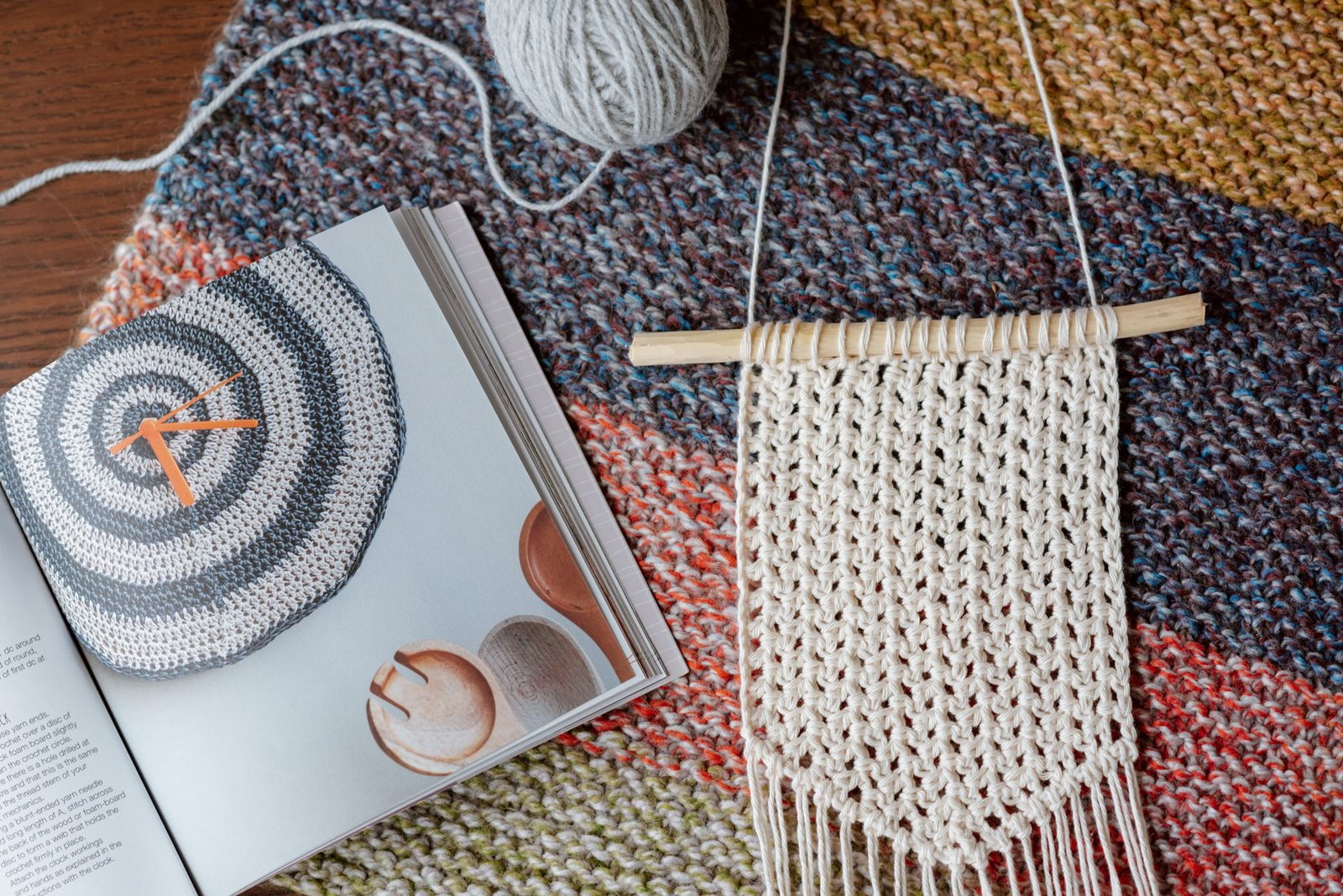
There is something deeply satisfying about taking a simple cord and transforming it through the deliberate tying of knots into something beautiful. No needles are required. No looms stand waiting. No machines hum in the background. Just cord, hands, and the repeated motion of knotting creates texture, pattern, and form. This is macramé, an art form that has survived centuries of changing fashions because it addresses something fundamental in human creativity: the desire to make something with one’s own hands from materials as basic as rope.
Macramé is experiencing a renaissance in 2025 and 2026, particularly among people seeking handmade alternatives to mass-produced goods and meaningful ways to disconnect from screens. Yet the resurgence is not entirely new. Macramé has resurged and faded repeatedly across centuries, each time attracting fresh audiences while older practitioners pass knowledge to new generations. Understanding macramé’s present popularity requires looking backward to see how this art emerged, nearly disappeared, survived in hidden communities, and returned again.
Origins in the Arab World
The documented history of macramé begins in the thirteenth century with Arab weavers in North Africa and the Middle East. These artisans took the loose threads left behind after weaving hand-loomed textiles and knotted them into decorative fringes. The technique transformed what would have been waste material into ornamentation, giving practical purpose to artistic impulse. The fringes adorned towels, shawls, and veils, with the knotted edges both beautiful and functional, serving the practical purpose of keeping flies away from camels and horses in desert regions.
The word macramé itself derives from Arabic origins, though etymologists debate the precise lineage. Most scholars point to the Arabic miqrama, understood to mean ornamental fringe, striped towel, or embroidered veil. The Andalusian-Arabic makramiyya and the Turkish makrama both appear in historical records as potential sources. What matters is not which exact term was original, but that the craft itself originated with Arab artisans who recognized the artistic possibilities within knotted thread.
The knotting techniques themselves are remarkably simple. The square knot, the half hitch, and variations thereof form the foundation of nearly all macramé work. No tools beyond hands are necessary. This simplicity is part of macramé’s genius. Once someone understands how these knots work and how they stack and combine, they can create patterns of surprising complexity from basic elements.
Spread Through Europe and Elevation in Status
The arrival of macramé in Europe came through multiple pathways. The Moorish invasion of the Iberian Peninsula beginning in the eighth century brought Arab cultural practices to Spain. From Spain, the craft traveled northward into France and Italy. The Crusades provided another route, as wives and servants of crusaders returning from the Middle East carried knowledge of macramé home with them, particularly to ports like Genoa in Italy.
What is particularly interesting is how European communities received and adapted macramé. Nuns, who possessed sophisticated knowledge of lacemaking and needlework, recognized macramé’s potential immediately. They saw it as a simpler alternative to the complicated techniques required for traditional lace creation. By substituting finer materials for the thicker wool traditionally used, nuns elevated macramé from a practical craft into an art form capable of producing work of genuine refinement. Macramé panels created by religious communities became merchandise, sold to support convents and monasteries.
The technique reached England when Queen Mary II adopted it in the late seventeenth century and taught macramé to her ladies-in-waiting at court. What had been a practical folk craft became fashionable among the aristocracy. The transformation of macramé’s status from working-class utility to royal pastime gave it respectability and accelerated its adoption among the growing middle class.
The Victorian Explosion
The nineteenth century saw macramé reach its cultural peak through the Victorian era. Middle-class homes throughout Europe and North America displayed macramé work: tablecloths with knotted edges, bedspreads worked entirely in intricate patterns, curtains finished with macramé borders. The craft suited Victorian sensibilities perfectly. It combined utility with beauty. It provided respectable occupation for women’s hands during an era when idleness was considered unseemly but paid work was considered inappropriate. Macramé offered a middle path: productive activity that produced objects of genuine value.
Publishers responded with enthusiasm. Sylvia’s Book of Macramé Lace, published in 1882, became iconic, providing instructions for creating trimmings for clothing, household linens, and decorative accessories. The book’s success reflected genuine hunger for instruction and inspiration. Victorian parlors became spaces where women gathered to work on macramé projects, creating friendship while creating beauty.
Sailors contributed their own tradition to macramé’s Victorian popularity. Nineteenth-century sailors created macramé objects during long voyages at sea, made hammocks, bell fringes, and belts which they sold or traded when reaching port. The sailors called the process square knotting or McNamara’s Lace. The craft suited maritime life because it required no tools, minimal materials, and produced objects of genuine utility alongside artistic merit. Through sailors, macramé traveled to ports worldwide.
Decline and Near-Disappearance
Macramé began fading from fashion in the early twentieth century as industrial production made decorated textiles cheaper and easier to acquire. Why spend hours knotting when factory-made alternatives were available? Why maintain knowledge of a craft when the world seemed to be moving toward mechanization and mass production?
By the 1950s, macramé had largely vanished from mainstream culture. It survived only in pockets: among folk-art communities, in rural areas where traditional knowledge persisted, among sailors still working the seas, and in the hands of dedicated craft revivalists who maintained techniques more through stubbornness than fashion. This period of near-invisibility, lasting roughly fifty years, was crucial to macramé’s future. The knowledge did not disappear entirely. The knots remained unchanged. The principles endured. When cultural conditions shifted to make macramé relevant again, the complete technical foundation was ready.
The Counterculture Revival
The 1960s and 1970s brought social upheaval that created perfect conditions for macramé’s resurgence. The counterculture movement explicitly rejected mass production, corporate capitalism, and industrialized aesthetics. Handmade goods signified authenticity and resistance. Natural materials held spiritual meaning. Labor-intensive arts gained prestige precisely because they required human effort and could not be mechanized.
Macramé fit this moment perfectly. It was entirely handmade. It used natural materials like jute, hemp, and cotton. It required no electricity, no equipment, no corporate infrastructure. Plant hangers macramé wall hangings and jute accessories became iconic 1970s design elements. The craft connected hippie aesthetics to practical home decoration. Teenagers learned macramé alongside yoga and vegetarianism as part of alternative lifestyle exploration.
The affordability of materials meant macramé was accessible to people with limited budgets, a significant factor in its adoption by students, young adults, and communities building alternative lives outside mainstream consumer culture. A simple jute cord cost pennies. The results could decorate an entire room or become wearable accessories. The accessibility of macramé democratized the craft in ways that expensive materials never could.
Contemporary Resurgence
After declining again in the 1980s, macramé began reappearing in the early 2000s, particularly in jewelry form. Macramé necklaces, bracelets, and anklets featuring glass beads, shells, and natural stones created handmade accessories that differentiated wearers from mass-market consumers. Social media platforms, particularly Instagram, Pinterest, and Etsy, transformed macramé’s visibility. Artists and crafters who might have worked in isolation could suddenly share their work globally. Inspirational images of macramé wall hangings, plant hangers, and fashion accessories circulated widely.
The current resurgence differs from previous ones in important ways. Contemporary macramé artists work at scales from jewelry to large fiber art installations. They use traditional techniques alongside contemporary materials and aesthetics. What was once strictly decorative home craft has become recognized as serious fiber art. Museums and galleries exhibit macramé work. Established art fairs showcase macramé artists. Mary Walker Phillips’s 1970 book Step by Step Macramé remains influential, but contemporary artists have created hundreds of books and thousands of online tutorials making instruction universally accessible.
Why Macramé Endures
Macramé survives because it meets genuine human needs that persist across centuries. It provides meditative practice for the hands while engaging the mind. Many practitioners describe macramé as therapeutic, a practice that requires sufficient attention to occupy the brain but allows thoughts to wander in productive ways. In an era of screen-dominated existence, the tactile, analog experience of working with cord offers something genuinely different.
Macramé also satisfies the hunger to create without requiring years of training or expensive equipment. A person can buy materials for a few dollars, watch an online tutorial, and create something beautiful within hours. This accessibility means macramé builds confidence in people who might not consider themselves creative.
Finally, macramé resonates because it represents intentional making. Each knot is tied deliberately by a human hand. That quality of intentionality, visible in the finished piece, communicates care and presence in a world often characterized by haste and distraction. Macramé objects carry within them the time invested in their creation, and that time commitment has value.
Disclaimer: This article is intended for general informational purposes only. Macramé history and techniques are drawn from multiple historical sources. Always verify historical claims through original sources when accuracy is critical.