For centuries, punch needle embroidery remained a quiet craft practiced in hidden corners. Monastery workshops, sailing ships, and working-class cottages all became sites where this textile art form flourished. Today, the craft has experienced an unexpected resurgence, accumulating nearly a billion social media views and fundamentally reshaping how millions approach creativity, mental wellness, and handmade authenticity. What was once perceived as dated is now one of the most popular crafts among younger demographics, proving that valuable innovations often have deep historical roots.
Tracing the Threads Back Through Time
The exact origins of punch needle embroidery remain somewhat enigmatic, with evidence suggesting that multiple cultures developed similar techniques independently. Ancient Egyptians created some of the earliest examples, fashioning needles from hollow bird wing bones. This resourceful solution proved so effective that it persisted for centuries. These simple tools accomplished what modern punch needles do today: they pushed yarn through fabric to create dense, textured loops.
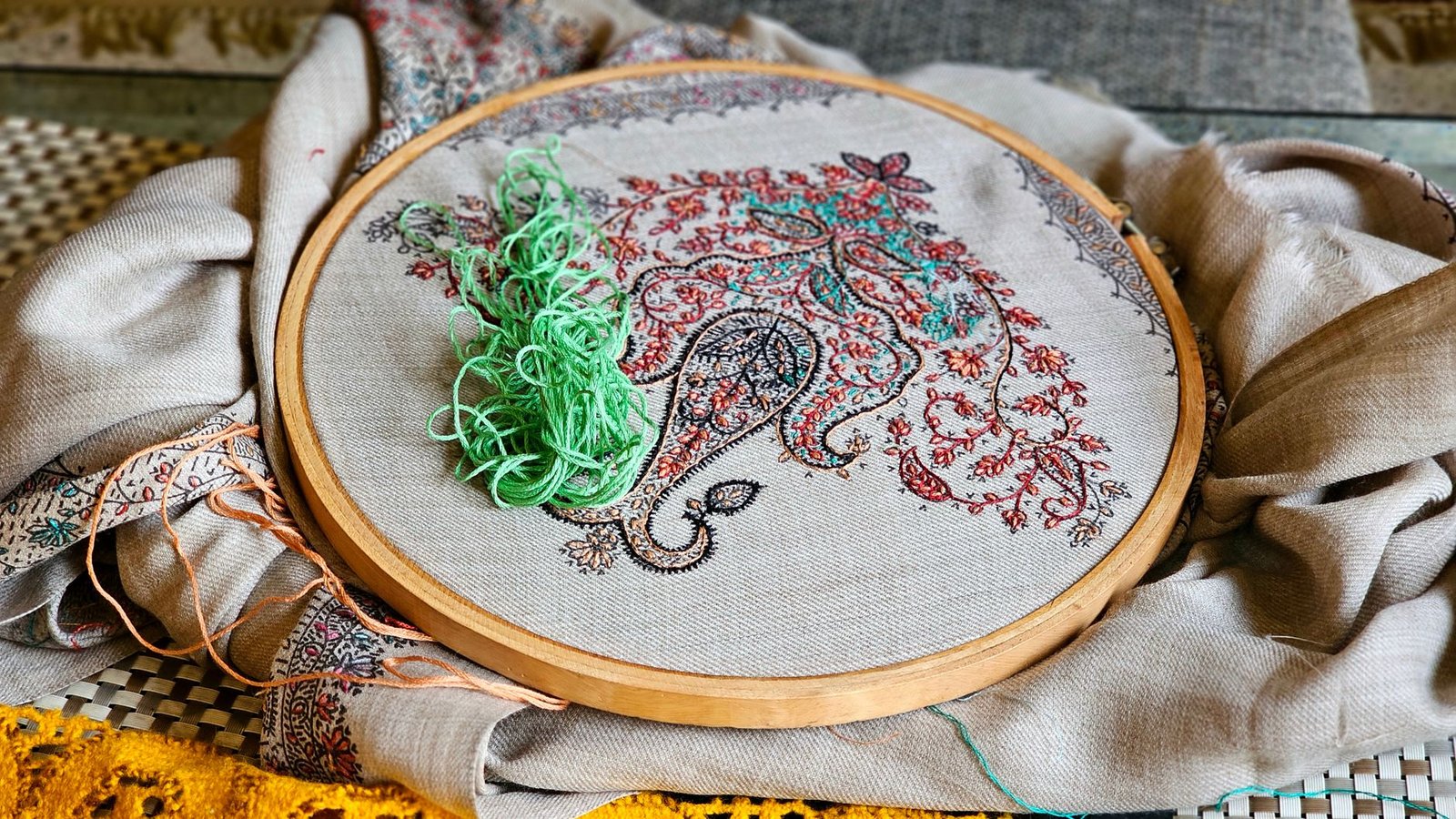
The technique appears throughout European history, with particular prominence during the medieval period. By the 15th century, the practice had acquired its own terminology: “punch stitch.” Throughout Europe, artisans used this method to create elaborate decorations on ecclesiastical garments and religious panels. Monks and convent workers dedicated extensive hours to refining this technique. They used it to embellish vestments for clergy and craft ornamental pieces for church spaces. The meticulous detail and spiritual commitment evident in these pieces reflected the religious importance of the craft in medieval society.
A distinct Russian punch needle tradition emerged, known as “igolochky,” which specialized in extraordinarily fine work using single strands pulled from multi-stranded embroidery floss. This miniature form became renowned for its delicate precision. It represented a regional variation that preserved ancient techniques through generations.
The Industrial Revolution’s Unexpected Gift
The narrative shifts significantly during 19th-century Britain. As industrialization transformed textile production, machine-made carpets became fashionable among wealthy households. However, workers in carpet factories discovered value in what others discarded. Factory owners allowed employees to collect leftover wool scraps (small bundles called “thrums”) and take them home. Using simple hooks attached to wooden handles, these workers began creating their own rugs. They transformed factory waste into colorful floor coverings that improved the appearance and feeling of humble homes.
This grassroots innovation addressed a genuine problem. Most 19th-century homes featured hastily constructed softwood floors that were both visually unappealing and physically uncomfortable. Punch needle rugs offered an affordable, creative solution that allowed working families to add warmth and beauty to their living spaces. What began as practical necessity gradually became tradition, with punch needle rug-making evolving into a cherished domestic craft passed through working-class families across generations.
The Technique: Simple Yet Sophisticated
The elegance of punch needle lies in its apparent simplicity. The tool itself is straightforward, a hollow needle with an angled opening attached to a handle that resembles a thick pen. What distinguishes it is the needle’s eye placement. Located just above the sharpened tip (not at the base), this design allows yarn to feed through the hollow bore and exit precisely at the working point.
The process begins with essential preparation and execution steps.
Setting Up Your Foundation
- Stretch fabric tightly in an embroidery frame until completely drum-tight
- Use monk’s cloth, weaver’s cloth, linen, or burlap depending on your yarn weight
- Ensure fabric tension remains tight throughout the project (loose fabric causes uneven loops)
- Select a wire threader to feed yarn through the hollow needle opening
Executing the Punch Technique
- Work from the fabric’s back side throughout the project
- Push the hollow needle through to its full depth on each stitch
- Withdraw the needle just enough to let the point graze the surface
- Keep the loop pressed firmly through the fabric as the needle exits
- Move to the next spot and repeat the punch motion
- Continue this pattern across your entire design
Building Your Finished Piece
- Punch thousands of times gradually to build your image
- Watch as loops compress and pack tightly together
- Create a textured pile surface (similar to hooked rugs) on the front
- Develop flat, embroidery-like stitches on the back side
The remarkable aspect of punch needle work is that no adhesive is required. The loops remain secure through tension created by densely packed stitches alone. The technique also proves highly forgiving; if a stitch goes wrong, simply pull it out and punch again. The fabric itself absorbs and holds the yarn, making corrections straightforward.
From Single Rooms to Gallery Walls
For most of its history, punch needle remained firmly positioned within the handicraft category. However, this categorization began to shift. Beginning in the late 20th century and accelerating throughout the 2020s, artists recognized punch needle’s potential as legitimate fine art. Contemporary textile artists combined punch needle with photography, creating mixed-media pieces that bridged fine art and craft traditions. The textured, paint-like quality of punch needle proved remarkable for creating work that functions as contemporary art. The way loops create tonal blending and depth added sophistication to finished pieces.
Today, punch needle appears in galleries across North America and beyond, displayed alongside photographs, sculptures, and other media. Artists including Adrienna Matzeg have developed approaches using punch needle to render travel memories and landscape scenes with sophisticated color theory and compositional awareness. The craft has deliberately refused traditional categorization that separates “hobby” from “fine art,” instead demonstrating that these categories can be beautifully interconnected.
Getting Started: Accessibility as Revolution
What makes punch needle remarkable for contemporary craftspeople is its true accessibility. Beginner kits typically cost under $20. Within the first hour, you will have visible results. Most small projects are completable in a single sitting.
What You Actually Need
- Punch needle tool (sized for your yarn)
- Embroidery frame or hoop (no-slip recommended)
- Monk’s cloth, weaver’s cloth, or similar tightly woven fabric
- Yarn in colors of your choice
- Pattern (pre-printed or drawn on fabric)
- Wire threader (usually included with needle)
- Optional: blending tools, trimming scissors, fixative spray
Getting Your First Project Done
- Select a small, simple pattern for your first project
- Transfer or print your pattern onto prepared fabric
- Stretch fabric in frame until drum-tight
- Thread your punch needle with chosen yarn color
- Begin punching following your pattern outline
- Work for one to two hours and review your progress
- Complete small projects within a single sitting
The craft is radically democratic. You do not need artistic talent, manual dexterity, prior needlework experience, or any special ability. People of all ages, abilities, and backgrounds are picking up punch needles and creating impressive work within hours. This democratization represents perhaps punch needle’s greatest revolution. It demonstrates that beautiful, meaningful art is not gatekept by skill or talent, but rather by willingness to show up and engage.
Where Ancient Craft Meets Digital Culture
Punch needle embroidery represents something fascinating about contemporary culture. It demonstrates how ancient practices can find new life in modern contexts. The craft connects to medieval monks, Victorian factory workers, and seafaring traditions. Yet it thrives on TikTok and Instagram, practiced by Gen Z creators in apartments and coffee shops. It provides the tactile, grounding experience many seek to counterbalance digital life. Simultaneously, digital platforms and online communities propel its growth.
The craft persists because it addresses real human needs: creative expression, mental wellness, and connection to handmade authenticity in an increasingly automated world. Whether framed as fine art, therapeutic practice, social hobby, or simple creative outlet, punch needle embroidery has proven its enduring value. What was once a quiet tradition practiced in monasteries and working-class cottages has become a global movement.
Disclaimer: This article is for educational and informational purposes.