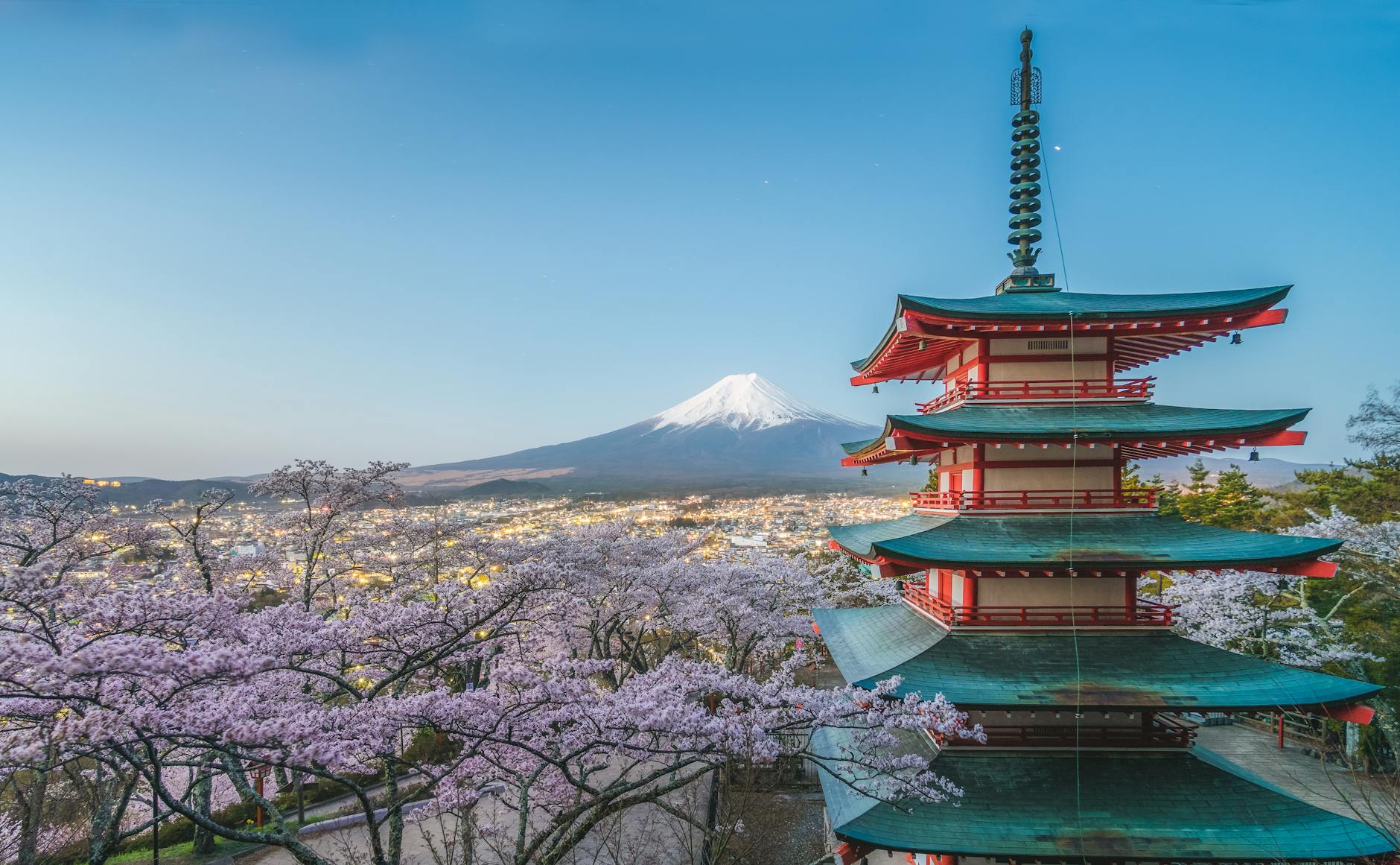
Japan is a country of contrasts. If you are considered Japan travel in the coming days, this guide can help with a few things.
Ancient temples share city blocks with glass skyscrapers. Street food costs next to nothing yet rivals food served in fine restaurants. Bullet trains run so precisely that a one-minute delay earns a public apology. Whether you have one week or several months, a visit to Japan can give you unique experiences that stay with you long after you return home.
Best Time to Visit
Japan has four distinct seasons, and each one draws a different kind of traveler.
- Spring (March to May) is the most popular time to visit Japan. Cherry blossoms, known as sakura, typically bloom from late March to mid-April. Parks and riverbanks burst with soft pink color, and locals gather beneath the trees for outdoor picnics. Expect higher hotel prices and bigger crowds during peak bloom weeks.
- Autumn (September to November) is many seasoned travelers’ favorite season. Maple and ginkgo trees turn vivid shades of red, orange, and gold from mid-October onward. The air is dry and cool, ideal for long days of walking.
- Summer (June to August) brings heat, high humidity, and a rainy season in June. Despite the weather, summer is alive with colorful festivals and fireworks displays.
- Winter (December to February) is quieter and colder, but rewards those who visit. Hokkaido and the Japanese Alps offer excellent skiing, and popular temples and shrines are far less crowded.
Top Attractions and Opening Times
Timings listed below are standard and can shift by season or public holidays. Always confirm on official websites before your Japan travel.
Tokyo
Japan’s capital blends the ultra-modern with the deeply traditional. Key sights include:
- Senso-ji Temple, Asakusa: Grounds open 24 hours; main hall open 6:00 AM to 5:00 PM (6:30 AM from October to March).
- Shibuya Crossing: Open around the clock; most spectacular on weekday evenings when foot traffic peaks.
- teamLab Borderless, Azabudai Hills: Open 9:00 AM to 9:00 PM. Advance online booking is essential as walk-in entry is not guaranteed.
- Tokyo Skytree: Open daily 8:00 AM to 10:00 PM. Book weekend tickets ahead of time to avoid long queues.
Kyoto
Japan’s cultural heart, Kyoto holds more than 1,600 Buddhist temples and 400 Shinto shrines. Top picks include:
- Fushimi Inari Shrine: Open 24 hours. Arrive before 8:00 AM to walk the iconic orange torii gate trails in near-silence.
- Arashiyama Bamboo Grove: Open at all times and free to enter. Sunrise visits offer calm and good light for photography.
- Kinkaku-ji (Golden Pavilion): Open 9:00 AM to 5:00 PM daily. Entry fee applies.
- Gion District: No opening hours; best explored on foot in the early evening, when geiko and maiko may be seen walking to appointments.
Osaka
Osaka is Japan’s most outgoing city and arguably its greatest food destination. Key attractions include:
- Osaka Castle: Open 9:00 AM to 5:00 PM; closed December 28 to January 1. The surrounding park is free and open at all times.
- Dotonbori: A neon-drenched canal street best experienced after dark, when restaurants and street food stalls come fully alive.
- Universal Studios Japan: Generally opens at 8:30 AM; closing times change by season. Buy tickets in advance.
Hiroshima and Miyajima
These two destinations are best visited together and make a deeply moving day trip or overnight stay:
- Hiroshima Peace Memorial Museum: Open 8:30 AM to 6:00 PM (until 7:00 PM in summer). Entry fee applies. Allow at least two hours.
- Itsukushima Shrine, Miyajima Island: Open 6:30 AM to 6:00 PM. The shrine’s famous floating torii gate looks most dramatic at high tide. Check tide tables before you go.
Nara
Located just 45 minutes from Kyoto or Osaka, Nara is easy to visit as a half-day trip:
- Todai-ji Temple: Open 7:30 AM to 5:30 PM (closes at 4:30 PM in December and January). Entry fee applies.
- Nara Park: Free and open at all times. More than 1,000 wild deer roam freely here and will bow back if you bow first.
Sample Itineraries
One Week
Days 1 to 2: Tokyo. Spend your first day in Asakusa and Shibuya. On day two, explore Harajuku’s quirky Takeshita Street, the calm of Meiji Shrine, and Shinjuku’s Golden Gai alleyways at night.
Day 3: Day trip from Tokyo. Kamakura offers a giant seated Buddha and seaside Zen temples. Nikko offers ornate shrines in mountain cedar forests. Either works well as a full day out.
Days 4 to 5: Kyoto. Visit Fushimi Inari early on day four. See the Golden Pavilion and Arashiyama in the afternoon. On day five, take a 45-minute train to Nara for the morning, then return to spend your evening in Gion.
Day 6: Osaka. Visit Osaka Castle in the morning. Spend the afternoon at the covered shopping arcades of Shinsaibashi. End the day in Dotonbori with takoyaki (octopus dumplings) and okonomiyaki (savory pancakes).
Day 7: Departure. Pick up last-minute gifts at a department store basement food hall before heading to Kansai International or Itami Airport.
Two Weeks
Start with the one-week plan above, then extend your journey:
Days 8 to 9: Hiroshima and Miyajima. Visit the Peace Memorial Park and Museum on day eight. On day nine, take the short ferry ride to Miyajima Island and walk to Itsukushima Shrine.
Days 10 to 11: Hakone. Relax in a hillside onsen (hot spring) with views of Mount Fuji on clear days. Ride the Hakone Ropeway for aerial views over volcanic terrain.
Days 12 to 13: Kanazawa or Takayama. Kanazawa offers Kenroku-en, one of Japan’s most celebrated traditional gardens, as well as a preserved geisha district. Takayama is a small mountain town with sake breweries, morning markets, and Edo-era merchant streets. Both are ideal for travelers who prefer a quieter, more contemplative pace.
Day 14: Return to Tokyo. Use your final day for any shopping you missed and a comfortable overnight before flying home.
Ideas for Slow Travelers and Long-Stay Visitors
Japan rewards travelers who slow down. If you have more than two weeks, consider going deeper into one region rather than covering more ground.
- Rent an apartment for a week or more. Staying in a residential neighborhood in Tokyo, Kyoto, or Osaka lets you shop at local grocery stores, cook at home, and experience daily life in a way that hotels cannot offer. Monthly and weekly rentals are available through local property platforms.
- Walk an ancient pilgrimage trail. The Kumano Kodo in Wakayama Prefecture is a UNESCO-listed network of forest paths connecting mountain shrines. The Nakasendo trail runs between Kyoto and Tokyo, passing through well-preserved post towns like Magome and Tsumago where time feels largely unchanged.
- Stay at a Buddhist temple on Koyasan. About two hours from Osaka by train and cable car, Koyasan is a mountaintop monastery town. Guests sleep in temple lodgings, eat traditional Buddhist vegetarian cuisine called shojin ryori, and can join monks for early morning meditation and prayers.
- Attend a local matsuri. Japanese festivals take place across the country from spring through autumn, most organized around neighborhood shrines. They feature traditional music, food stalls, taiko drumming, and fireworks. Check local tourism calendars to find one happening near where you are based.
- Switch from the JR Pass to IC cards. The Japan Rail Pass works well for tourists covering many cities quickly. Long-stay travelers often find a rechargeable IC card such as Suica more practical for daily use on local trains, subways, buses, and even at convenience stores.
- Pick up basic Japanese phrases. Sumimasen (excuse me), arigatou gozaimasu (thank you very much), and eigo no menyu wa arimasu ka? (do you have a menu in English?) will serve you well every single day. The effort is always appreciated.
Respecting Local Culture
Japan’s social norms are not difficult to follow, but they matter. A little awareness goes a long way in showing respect to the people and places around you.
- Take off your shoes when entering homes, many traditional restaurants, ryokan (traditional inns), and some temple interiors. The lowered entry area, called a genkan, is your signal to remove footwear before stepping inside.
- Keep public transport quiet. Eating, drinking, and phone calls are generally avoided on trains and buses. Set your phone to silent and speak at a low volume if you must talk.
- Eat at the stall, not on the move. In most parts of Japan, eating while walking is considered inconsiderate to others. Many street food vendors provide a small standing area for customers; use it.
- Do not tip. Tipping is not practised in Japan and can cause genuine awkwardness. Excellent service is a point of professional pride, not an expectation of a financial reward.
- Follow the rules at onsen. Shower and wash your entire body thoroughly before entering a communal hot spring pool. Keep your towel out of the water. Note that many onsen still prohibit guests with tattoos; smaller, private onsen baths are usually available as an alternative.
- Bow to greet and to thank. A short, gentle forward tilt of the head is the everyday version of the bow and is perfectly appropriate for visitors. No need to go low.
- Handle waste carefully. Public rubbish bins are rare in Japan. Carry a small bag for your own litter until you reach a convenience store, which will have a bin for customers.
Shopping Guide
Japan’s shopping scene is varied, well-organised, and often beautifully presented. Here is a category-by-category breakdown to help you plan:
- Traditional crafts and souvenirs: Kyoto’s Nishiki Market and Tokyo’s Asakusa shopping streets are reliable spots for ceramics, lacquerware, hand-painted fans, and tenugui (thin dyed cotton cloths). Quality varies, so look for items marked as locally made.
- Electronics and tech: Akihabara in Tokyo remains the destination for cameras, audio equipment, gaming accessories, and anime merchandise, often at prices lower than in other countries.
- Beauty and skincare: Japanese drugstores such as Matsumoto Kiyoshi and Sundrug stock an impressive range of skincare products at very reasonable prices. Sunscreen, sheet masks, face cleansers, and hair oils are consistent favorites among international visitors.
- Food gifts: Department store basement floors, called depachika, carry beautifully packaged regional specialties. Green tea confectionery, mochi (soft rice cakes), senbei (savory rice crackers), and individually wrapped regional sweets travel well and make thoughtful gifts.
- Vintage and secondhand fashion: Tokyo’s Shimokitazawa district is lined with curated secondhand clothing shops. Prices are fair and the selection is genuinely excellent.
- Stationery and books: Japan’s stationery culture is exceptional. Stores such as Loft, Tokyu Hands, and Itoya in Ginza carry notebooks, pens, washi tape, and paper goods that are difficult to find elsewhere. Budget extra bag space accordingly.
Travel Essentials
A few practical points can make a real difference to how smoothly your trip runs.
- Visa: Visitors from many countries, including India, the United States, the United Kingdom, Australia, and most of Europe, can enter Japan without a visa for stays of up to 90 days. Requirements do change, so check with the Japanese Embassy or official government sources before booking.
- Currency: Japan remains heavily cash-dependent. ATMs at 7-Eleven convenience stores and Japan Post Bank branches reliably accept international cards. Withdraw enough cash each time, as bank ATMs in smaller towns may have limited hours.
- Getting around: The train network is punctual, extensive, and straightforward to use once you understand it. The JR Pass offers good value for travelers making multiple intercity journeys within a set window. For city travel, a rechargeable IC card (Suica, Pasmo, or Icoca) is the most convenient option and can be used on nearly all buses and trains across the country.
- Connectivity: Collect a pocket Wi-Fi device or a prepaid data SIM card at the airport arrivals hall. Both options are affordable and available from multiple vendors. Reliable internet access is useful for real-time navigation, translation, and finding restaurants.
- Translation: Google Translate’s camera function can read Japanese menus and signs in real time. Download the Japanese language pack before you travel so the feature works offline as well.
- Safety: Japan consistently ranks among the safest countries in the world for tourists. Petty crime is uncommon. The main natural risk is seismic activity; Japan experiences earthquakes regularly, though most are minor. Familiarize yourself with your hotel’s emergency procedures, and download the Japan Tourism Agency’s Safety Tips app for English-language earthquake alerts.
- Health: Tap water is safe to drink everywhere in Japan. If you take prescription medication, bring a sufficient supply from home, as some common Western drugs are not available or are sold under different formulations. Comprehensive travel insurance that includes medical coverage is strongly recommended.
- Convenience stores: 7-Eleven, Lawson, and FamilyMart outlets are open 24 hours and found on almost every urban street. They stock fresh hot meals, sandwiches, snacks, medicines, toiletries, and cash ATMs. For a traveler at any hour of the day, they are an invaluable resource.
Japan is the kind of destination that rarely disappoints and often surprises. The more you engage with it, rather than simply passing through, the more it gives back. Go with an open mind, observe before acting, and leave room in your schedule for the unplanned moments. Those tend to be the best ones.
Disclaimer: The information in this article is intended as general guidance only; travel conditions, visa rules, and attraction timings may change, so verify all details with official sources before your trip.


