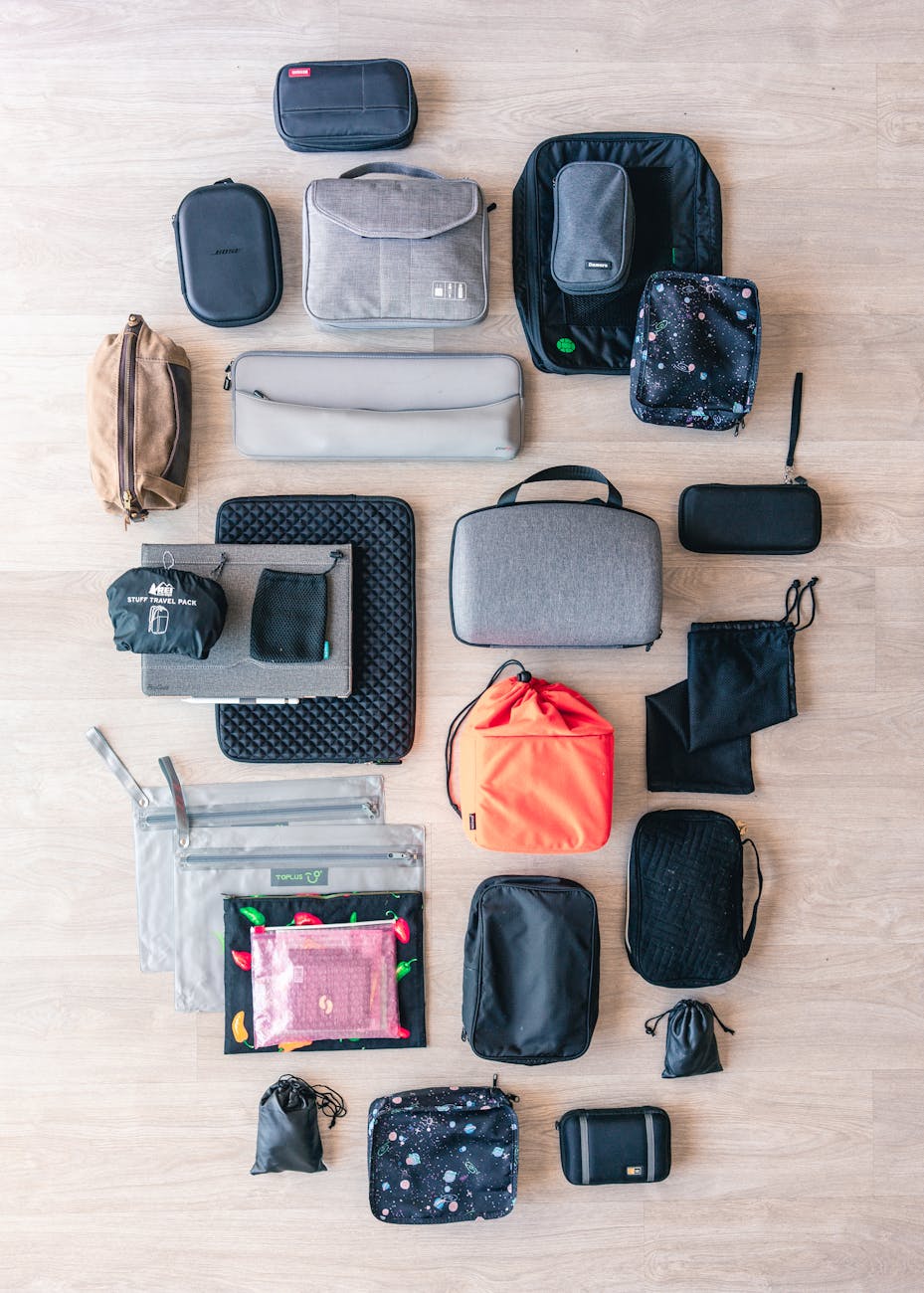
Packing well is a skill. It takes most people a few trips to figure out that the things they thought they needed and the things they actually needed are two very different lists. The towel they packed takes up a third of the bag. The universal adapter they left behind is the one thing they desperately needed in the hotel room. The neck pillow they felt silly buying was, by hour six of the flight, the best decision they ever made.
Good travel accessories do not just add comfort. They reduce friction. They turn a stressful airport morning into a manageable one. They mean you are not hunting for a pharmacy at midnight in a city where you do not speak the language. They are the quiet infrastructure of a good trip.
This guide covers the accessories worth knowing about, organised by what they do and when you need them. None of them are luxury items. All of them earn their place in the bag.
Carrying Your Things Well
The bag you travel with shapes every other decision you make. A bad bag makes everything harder.
Packing cubes are the single best upgrade most travelers can make to their packing routine. These lightweight fabric organisers divide a suitcase or backpack into compartments, keeping clothes compressed, categories separated, and the whole bag easier to navigate at a glance. Separate cubes for tops, bottoms, underwear, and cables mean you are not unpacking the entire bag every time you need one thing.
A lightweight day bag or packable tote is essential for anyone who plans to explore on foot. A bag that compresses into its own pocket takes up almost no space in your main luggage and is endlessly useful once you arrive. Look for one with a secure zip closure rather than an open top.
A luggage scale eliminates one of the most preventable travel stresses. Weighing your bag before you leave for the airport costs thirty seconds. Paying an overweight baggage fee at check-in costs considerably more. A compact hanging scale can weigh up to 50 kilograms and fits easily in a side pocket.
A TSA-approved combination lock is inexpensive and does the job. It will not stop a determined thief, but it discourages casual opportunists and prevents zips from opening accidentally in transit.
Staying Connected and Charged
Running out of power at an airport, in a foreign city, or mid-journey is one of the most avoidable travel problems there is.
A power bank is non-negotiable for most modern travelers. The most practical options for travel hold enough charge to fully recharge a smartphone two or three times. Look for one with at least two USB ports so you can charge more than one device at a time. Airlines have rules about battery capacity in hold luggage, so carry your power bank in your hand luggage.
A universal travel adapter is essential for international travel. Different countries use different plug types and voltage standards. A quality universal adapter covers the most common socket types worldwide and includes USB ports for charging multiple devices without needing additional plugs. Buy one good one and it will last years.
A short multi-port charging cable reduces the number of separate cables you need to carry. A single cable that terminates in USB-C, Lightning, and micro-USB connections handles most devices in one.
Noise-cancelling headphones or earbuds transform long flights and train journeys. The technology has become significantly more affordable in recent years. A good pair of wireless earbuds with active noise cancellation handles everything from blocking out cabin noise to making phone calls clearly in a busy airport. They are worth every bit of the space they take.
Sleeping and Comfort on the Move
Poor sleep in transit sets a bad tone for everything that follows. A few small investments make a real difference.
A travel neck pillow has come a long way from the foam horseshoe that used to be the only option. The better versions now use memory foam, wrap around to support both sides of the head, and compress into a small carry pouch when not in use. If you regularly travel on overnight flights or long train journeys, a good neck pillow is not optional.
A contoured sleep mask blocks light completely without pressing against the eyes. Look for one with a shaped interior so the fabric does not rest directly on the eyelids. Combined with the noise-cancelling earbuds, a sleep mask creates a workable sleep environment even in economy class.
Compression socks are recommended by flight health advisories for long-haul travel. Sitting in a cramped seat for many hours reduces circulation in the legs. Compression socks apply graduated pressure that keeps blood moving and reduces the swollen, heavy feeling that many long-haul travelers experience on arrival. They look unremarkable, they cost very little, and they make a genuine physical difference.
A thin packable scarf or light travel blanket doubles as a pillow, an eye shield, and a layer of warmth on cold flights or air-conditioned buses. A large cotton or merino wool scarf is the more versatile option; a dedicated travel blanket offers more warmth for less packability.
Health, Hygiene, and Safety
Staying well on the road requires a little preparation. These items take up minimal space and serve when you need them most.
A reusable silicone bottle set holds your shampoo, conditioner, and other liquid toiletries in TSA-approved containers. The silicone construction means they are soft, squeezable, and genuinely leak-proof in a way that hard plastic often is not. Label each one before you leave home.
A quick-dry microfibre towel takes up a fraction of the space a regular towel occupies and dries three to four times faster. It is indispensable for guesthouse travel, beach days, gym use, and any situation where a towel is needed and none is provided. The larger sizes work as a full body towel; the medium size is enough for most uses.
A small first aid kit customised for your own needs is more useful than a generic pre-packed one. At minimum, include blister plasters, an antiseptic wipe supply, any personal medication, a pain reliever, an antihistamine, and rehydration sachets. Add motion sickness tablets if you are prone to it.
A portable door alarm is a small device that hangs on a door handle and sounds a loud alarm if the door is opened while you sleep. It weighs almost nothing and provides meaningful peace of mind in accommodation where you are less certain of the locks. Many solo travelers regard it as standard kit.
A water purification solution is worth carrying if your itinerary includes areas where tap water is unreliable. Purification tablets are the lightest option; a filtered water bottle works for longer trips and produces better-tasting water. Either approach is cheaper, lighter, and more convenient than buying bottled water every day.
Staying Organised
Organisation is what separates a smooth trip from a stressful one. These accessories keep everything accessible and in its place.
A travel document organiser holds your passport, boarding passes, travel insurance documents, cards, and local currency in one place. The better ones include a RFID-blocking layer that prevents the electronic skimming of card and passport data. Slim enough to fit in a jacket pocket or the top compartment of a day bag.
A cable and tech organiser pouch stores all your charging cables, adapters, earbuds, and small tech accessories in a single flat case. Without one, these items end up tangled at the bottom of the bag in a way that is disproportionately aggravating to deal with at six in the morning.
Waterproof zip bags in multiple sizes are low-cost and endlessly useful. They protect documents from rain, keep wet swimwear from soaking other clothes, store toiletries that might leak, and organise the small miscellany that every bag accumulates. Carry a few in different sizes.
Luggage tags with your contact details are a basic but overlooked necessity. In the event your bag is lost or picked up by mistake, a clear tag with your name, email address, and phone number is what gets it back to you. Use a tag that covers your personal information from view on the outside.
Smart Additions Worth Considering
Beyond the essentials, a handful of newer accessories have earned a permanent place in many travelers’ bags.
A Bluetooth tracker placed inside your checked luggage gives you real-time location information throughout your journey. If your bag is delayed or misdirected, you know where it actually is rather than having to rely on airline tracking systems alone. Small enough to slip into an interior pocket.
Solid toiletries including shampoo bars, conditioner bars, and solid sunscreen have become significantly better in recent years and solve the liquid restriction problem entirely. They also last longer than their bottled equivalents, produce no plastic waste, and do not leak. A shampoo bar the size of a small soap can last as long as a full-size bottle.
An e-reader loaded before departure carries an entire library in the weight of a single slim device. For readers who go through books quickly or travel for extended periods, it is one of the best space and weight savings available. Many also include a built-in light suitable for reading without disturbing fellow passengers.
Reusable earplugs are inexpensive, take up almost no space, and are useful in a wider range of situations than most travelers anticipate: noisy hotel rooms, early morning departures in shared accommodation, overnight buses, and the general ambient noise of travel that disrupts sleep more than most people realise until they block it out.
A Note on Buying Well
The travel accessories market ranges from genuinely excellent to essentially useless, often at similar price points. A few principles help.
- Buy for your actual travel style, not an aspirational one. A digital nomad needs different things from a weekend city-hopper or a long-haul backpacker.
- Prioritise weight and packability. The accessory that sits in your bag unused because it is too heavy or too bulky is worth nothing.
- Spend more on what you use every day. A good power bank, a quality adapter, and a neck pillow you actually sleep in are worth investing in. A novelty gadget you might use once is not.
- Test things before a long trip. Use the packing cubes on a weekend away. Sleep in the neck pillow at home. Wear the compression socks on a shorter flight. Discovering that something does not work for you is far better done before the trip of a lifetime.
The best-packed bag is not the fullest one. It is the one where every item earns its place, does its job reliably, and makes the journey a little easier than it would have been without it.
Disclaimer: This article is intended for general informational purposes only. Product availability, specifications, and airline regulations change regularly. Always verify airline carry-on rules and destination-specific requirements before travel.